What really matters (and what you can safely ignore)
If your goal is clear—keep pieces bright, scratch-free and wearable—the essentials are few: keep metals dry and separate, protect soft stones and pearls from abrasion and chemicals, and avoid motion that tangles or stresses chains. You can safely ignore obsessive polishing schedules and complicated climate-control systems; most jewelry survives for years with simple, consistent habits.
End result: what “stored correctly” looks like
Stored correctly, each piece rests in its own soft compartment or pouch, metals that tarnish are kept away from humidity and sulfur sources, pearls and opals are cushioned and slightly humidified, and everyday items are easy to reach while special pieces stay in long-term storage. Necklaces hang or lie flat to prevent knots; rings and studs sit so stones don’t rub against metal.
Choose the right containers first
Pick storage with compartments and soft lining. For daily use, a multi-compartment jewelry box prevents most scratches and tangles. For long-term or display storage, consider stackable drawers or a transparent acrylic box so you can see contents without opening.
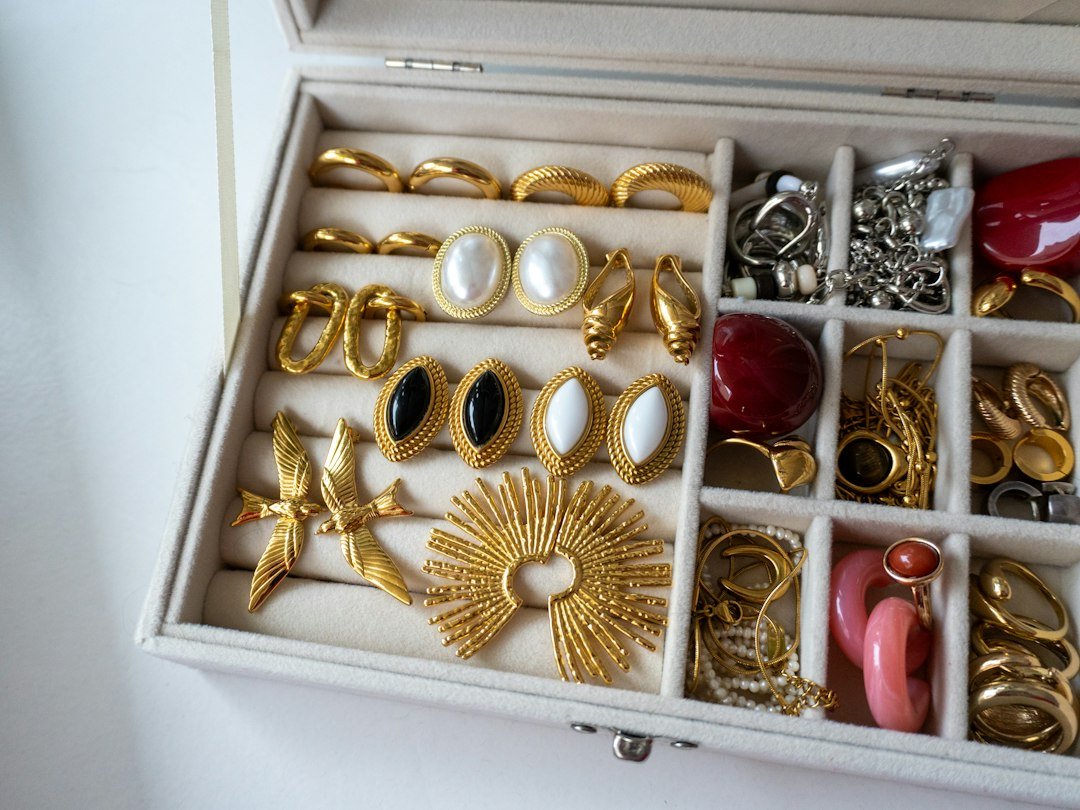
Product option: if you want a roomy, organized box with layers and compartments, the VLANDO Large Jewelry Box (Rank #2) fits many collections—use it for everyday rotation and to keep necklaces separate from rings.
Sort by material and vulnerability
Group pieces by how they react over time, not by outfit. Make these main groups:
- Fine metals prone to tarnish (silver, copper alloys)
- Gold and platinum (more stable but still scratch-sensitive)
- Soft gems and organics (pearls, opal, amber, turquoise)
- Hard faceted gems (diamond, ruby, sapphire—resistant to scratching but can chip)
Storing silver beside a pearl can harm the pearl’s nacre; keep groups separate to avoid chemical or mechanical damage.
Prevent tarnish with small, affordable controls
Tarnish accelerates with air, moisture and sulfur. For most homes, three tactics are enough:
- Use airtight small containers or zip bags for silver and copper; squeeze out excess air before sealing.
- Add anti-tarnish strips or a small silica gel packet for humidity control. Replace strips per manufacturer guidance.
- Store in a cool, dry, dark place—avoid bathrooms and sunny windowsills.
Protect delicate surfaces and gemstones
Soft gemstones and pearls demand soft contact and stable humidity. Wrap them in acid-free tissue or keep them in lined pouches. Avoid airtight plastic long-term for pearls; they need slight humidity to prevent drying and cracking of their nacre.
Necklaces and chains: stop the tangles
Necklaces need motion-free storage. Best approaches:
- Hang necklaces on a jewelry stand or on individual hooks inside a shallow tray.
- Lay chains flat in individual compartments with each clasp fastened to reduce knotting.
- Small travel trick: thread a chain through a straw and clasp—no tangles in a drawer or bag.
Rings and earrings: how to prevent scratches and loss
Rings should sit upright in ring rolls or individual padded slots so settings don’t rub. Studs and small earrings work well on small foam or felt cards with holes or in earring grids—avoid loose bunching that makes backs fall off.
Packing jewelry for travel
Use a compact roll or small pouch system that keeps items separated and immobile. For fragile pieces, wrap individually in soft cloth. Keep high-value items in a carry-on rather than checked luggage. For short trips, wear problem-prone pieces instead of packing them.
[h3]Quick troubleshooting: common storage problems and fixes[/h3>- Persistent tarnish on silver: clean gently with a soft cloth and mild silver cleaner, then reseal with an anti-tarnish strip.
- Tangled necklaces you can’t separate: freeze the knot for 15 minutes (makes links stiff), apply a drop of sewing machine oil, then loosen with fine needles—clean and dry thoroughly afterward.
- Loose stones in settings: remove and store the piece flat in soft padding, then have a jeweler re-tighten before wearing again.
When to use long-term storage vs. daily organizers
Daily organizers are easy-access boxes and trays; long-term storage should focus on low humidity, padded separation, and secure location (a locked drawer or safe for very valuable items). Items with sentimental value or infrequent wear benefit from archival-quality boxes and periodic inspections.
Care and cleaning before storage
Always clean jewelry of lotions, perfumes and sweat before storing. Use appropriate gentle cleaners—mild soap and water for most, a soft brush for settings, and a specialized cleaner for porous stones (e.g., turquoise or opal should not be soaked). Dry thoroughly to avoid trapped moisture.
Quick decision guide: choosing your storage solution
If you mainly wear a few pieces daily: choose a compartmentalized box or stand for accessibility. If you have a large mixed collection: get a layered box with drawers or an acrylic organizer so items are visible and separated. For travel: a padded roll or small pouch system.

- Sort by metal and gem vulnerability before placing in a box.
- Use soft-lined compartments or pouches; avoid stacking pieces.
- Control humidity with silica packs or anti-tarnish strips for silver.
- Hang or fasten necklaces to prevent tangles.
- Clean and fully dry items before storing.
- Use a travel roll or pouch for trips; keep valuables in carry-on.
Proper storage is mostly about separation, gentle surfaces, and controlling moisture and chemicals. A single well-organized box plus a few anti-tarnish controls will keep most collections looking their best for years.
Can I store all my jewelry together?
Not ideally—group by how pieces react to air and each other. Keep silver, soft gems, and organics separated to prevent chemical damage and abrasion.
Are anti-tarnish strips necessary?
They’re inexpensive and effective for silver and copper; use them in boxes or zip bags to slow tarnishing significantly.
How often should I clean stored jewelry?
Light cleaning before storage is enough; inspect and clean worn pieces every few months and have settings checked annually if worn often.
How should I store pearls long-term?
Keep pearls in a soft pouch or lined box, not airtight plastic—slight humidity prevents drying—and avoid contact with perfumes or cosmetics.
What’s the best way to prevent tangled necklaces?
Hang them, lay them flat in separate slots, or thread chains through straws for short-term storage or travel.